FAQs
Home /About/ History
FAQs
General Questions
Got questions about our nanobubble technology or how it works? You’re in the right place.
Our goal is to make advanced nanobubble water technology simple, clear, and accessible. Whether you operate a rural wastewater lagoon, manage produced water, or work in oil & gas.
Nano Gas™ Environmental develops patented nanobubble water technology that cleans wastewater, restores lagoons, increases oil production, and reduces chemical and energy use across multiple industries.
Our nanobubbles are used in:
Lagoon wastewater treatment
Produced water treatment
Enhanced oil recovery (EOR)
Agriculture (licensed to Easy Modular)
Energy and environmental remediation
We continue to explore new applications in mining, aquaculture, pulp & paper, and biofuels.
655 Deerfield Rd, Suite 100-140, Deerfield, IL 60015
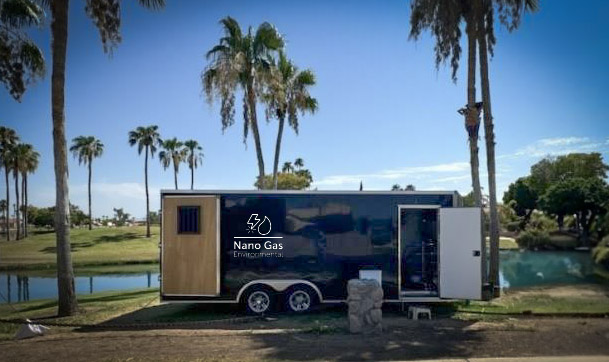
We operate nationwide and deploy mobile units to client sites across the U.S.
Pricing depends on project size, water volume, treatment duration, and application.
We provide custom proposals after a technical evaluation.
Contact us for a detailed quote.
Nanobubble Technology Questions
Put simply, nanobubbles are very small bubbles with unique properties that make them useful in various applications. By “very small,” we mean bubbles significantly smaller than you would see in a glass of carbonated water or a swimming pool.
Scientifically, nanobubbles are classified as gas bubbles with a diameter of less than .01 mm. Thanks to their small size, each nanobubble receives a negative surface charge and internal pressure of up to 30 bar.
The way nanobubble water works depends on the application. At Nano Gas Environmental™, we design a custom solution to suit each organization’s unique needs – and we do it across multiple industries and applications.
Nanobubbles can be used for many different things. Our company primarily uses nanobubbles for enhanced oil recovery, produced water treatment and lagoon wastewater treatment. We have licensed our technology to Easy Modular for agricultural use.
However, we recognize the potential for our revolutionary technology and hope to expand into other industries eventually. Pulp and paper, mining, aquaculture and healthcare are potential uses Nano Gas Environmental™ hopes to eventually expand into.
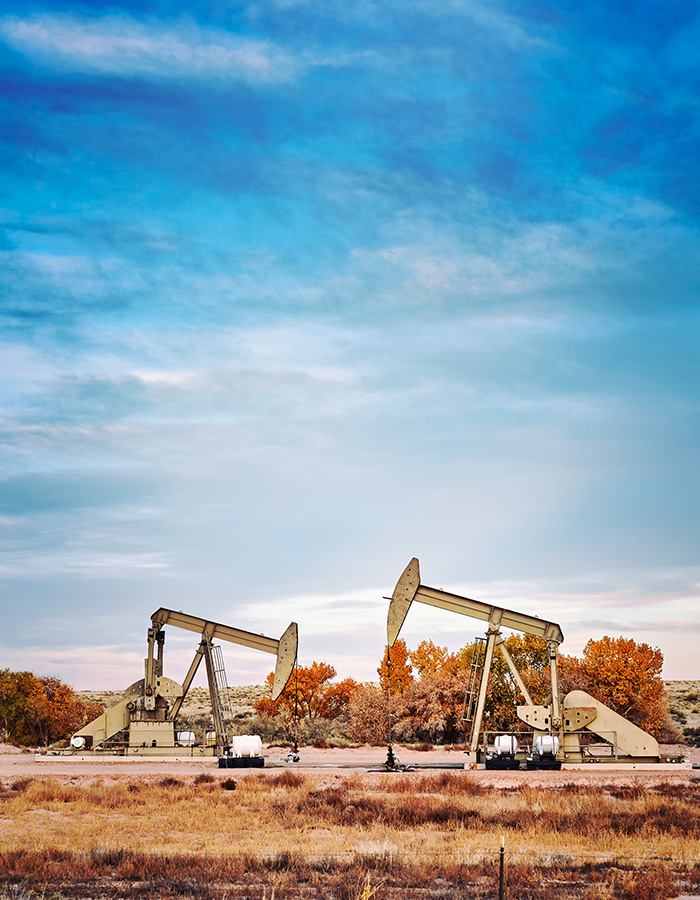
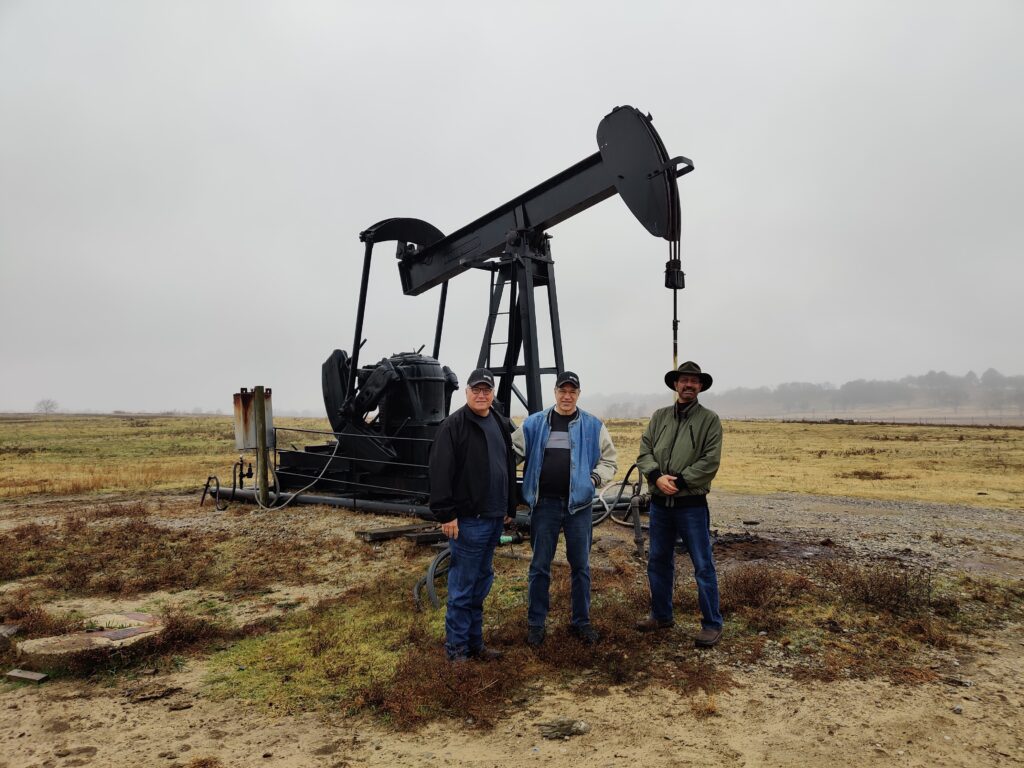
Nanobubbles act as a solvent during the enhanced oil recovery (EOR) process to decrease the oil’s viscosity so it rises to the top. Oil that is too low in the well to be pumped or is stuck on other surfaces becomes available. In turn, oil production rates can increase by 100-150% or more per well. This patented process creates many lucrative benefits for oil and gas companies.
Nanobubble lifespans can vary depending on the application and custom solution. However, nanobubbles can last a very long time once injected into the water. Our nanobubbles can work for weeks, months, or even a year after the injection! This extended lifespan means you can continue seeing results in certain applications for a long time after completing the initial project.
This process leads to increased oil production and turns dirty produced water into something clean enough to be reused. Once treated, the produced water can be used for drilling, water flooding or hydraulic fracking.
Nanobubbles are created using cavitation technology in specially built pumps. Nano Gas Environmental™ can create trillions of these special bubbles for our nanobubble water every minute using this method.
Our nanobubble water can be created using any gas, making it ideal for any application. Plus, our machines are designed without membranes, so they won’t clog in even the dirtiest of water. Since our nanobubble generator creates more nanobubbles in a single pass, our patented solution operates more efficiently and is highly scalable to incredible volumes.
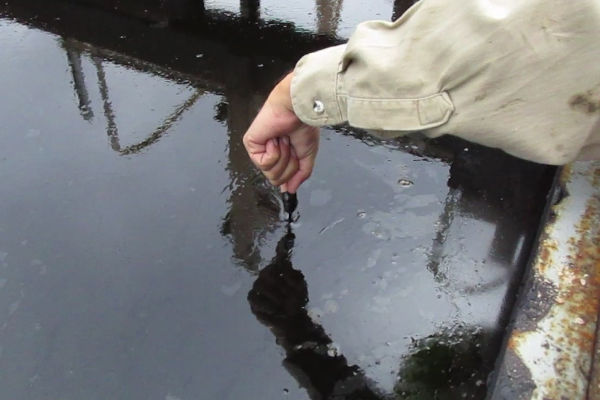
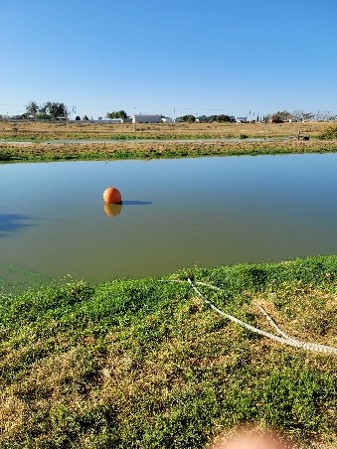
When lagoons become overrun with sludge and algae, traditional lagoon wastewater treatment options are expensive and leave byproducts in hazardous landfills. But nanobubble water is a safe, affordable alternative that doesn’t useexpensive equipment or chemicals. Instead, trillions of nanobubbles generate the chemical, biological and physical reactions necessary to clean your specific facultative lagoon.
Extensive testing is done beforehand to create a custom nanobubble solution that will consume the organic materials and eliminate algae within your lagoon.
Yes! Nanobubbles are safe for industrial equipment. In fact, they’re significantly safer than chemical alternatives, which can cause unnecessary wear and tear to equipment as well as be a hazard to the surrounding environment.
Extensive testing is done beforehand to create a custom nanobubble solution that will consume the organic materials and eliminate algae within your lagoon.
Nanobubbles work best in applications where organic material is the problem. For example, it targets organic material in facultative lagoons by providing oxygen to specific beneficial bacteria while eradicating harmful bacteria.
Unfortunately, inorganic materials are unaffected. Therefore, nanobubbles may not be the best solution if your facultative lagoon has sand, dirt or other inorganic pollutants. That’s why we always provide extensive testing and evaluation before beginning any project – we want to ensure that our nanobubble water is the correct solution for your unique issues.
There are a lot of industry terms used in our industry (and those we serve) that the average person might not understand. While we try to use layman’s terms whenever possible, it’s often challenging to do so. That’s why we’ve created an expanded list of industry terms below. We hope you find them helpful.
Biological
Something that is related to living organisms. When we say that something creates a “biological reaction,” we mean that it transforms the molecules inside the cell of a living thing.
Buoyancy
This is the ability or tendency to float in air, water or another fluid. When we say our nanobubbles change something’s buoyancy, we mean it affects how well (or not) it floats.
Carbon Footprint
A measure of how many carbon compounds (including carbon dioxide) are emitted during a process or procedure. Carbon compounds have a significant adverse effect on the environment and cause damage to the Earth’s ozone layer in large amounts.
Cavitation Technology
In fluid mechanics and engineering, cavitation is a process by which the static pressure of a liquid is reduced to below the liquid’s vapor pressure. When this happens, small holes or “cavities” filled with vapor form within the liquid. Cavitation is the bane of engineers because it can make pumps go bad and increase systems maintenance.
Charged (In Terms of “Gas”)
When we say that our nanobubbles are “charged” balls of gas, we mean that the ions and electrons inside them cause them to exhibit an external negative charge. The charges possessed by nanobubbles help create the chemical changes we discuss in oil wells and produced water treatment. Scientifically, this negative charge provides friction reduction and changes the electro potential, ionic potential and zeat potential of the fluid.
Contaminants
The simplest definition of a contaminant is something that isn’t supposed to be there. Generally, it refers to something that is poisonous, harmful, undesirable or that otherwise makes the contaminated substance impure.
Corrosives
You may also hear the terms “caustic” or “vitriolic,” which both mean the same as corrosive. These terms refer to substances that can destroy solid materials via a chemical reaction. Examples of highly corrosive substances include sodium, hydrochloric acid and ammonium hydroxide. In the industries we serve, corrosive substances can cause serious equipment damage and pose human health hazards.
Ecosystem
A system formed by living organisms and their environment. A healthy ecosystem allows all living organisms within this region to thrive. However, a disrupted ecosystem can lead to the death or decline of one or more living organisms.
Extraction
To remove something. When oil is “extracted,” it’s removed from the oil well.
Geology/Formations
These terms refer to natural elements found on a planetary body. We often use this term to describe the rocks, compacted Earth and similar features found within oil wells.
Hazardous Algal Blooms (HABs)
A type of excessive algae growth that negatively impacts other local living organisms. HABs also produce certain toxins that can be dangerous or even lethal to local human, animal and plant life.
Inorganic Materials
Any material that isn’t living and natural from a biological standpoint. Examples of inorganic materials include rocks, plastics and metals.
Lubricate
To apply oil, grease or another substance meant to allow smooth movement by minimizing friction.
Methane
A colorless and odorless greenhouse gas, also sold as natural gas, that’s a hazardous air pollutant responsible for environmental and human health problems.
Membranes (When Speaking of Equipment)
A thin barrier that allows something from one fluid to transfer to another. At Nano Gas™ Environmental, we create our equipment without membranes because they’re prone to clogging in really dirty environments.
Nanoscopic
A measure of size for something extremely small, one thousand times smaller than microscopic.
Neutralize
To make something harmless or ineffective by applying an opposite effect or force. For example, when corrosives are neutralized, they no longer possess the ability to destroy solid materials.
Oil Well Stimulation
A treatment performed to enhance or restore a well’s productivity. In enhanced oil recovery, stimulation is used as an alternative to acidizing.
Oil Viscosity
Describes how well an oil pours at a specific temperature. A lower viscosity oil will pour or move more easily than one with a higher viscosity.
Organic Materials
Any material composed of carbon-bound atoms. Examples include plant matter, manure, sewage sludge, insects, oils and microbes.
pH Levels
A measurement of how acidic or base a liquid is, on a scale of 0 to 14. The lower the pH level, the more acidic it is.
Production Rates
How much of a product can be produced in a set amount of time. When we say that our revolutionary nanobubble solution increases oil production rates, we mean it increases how much oil can be drawn from a well in a set time.
Specific Gravity
You may also hear this referred to as “relative density.” This is a measure of density ratios between two substances.
Surface Tension
A measure of how well the surface of a liquid resists an external force. Surface tension is one thing that allows objects to float (or not).
Suspended Solids
Small, solid particles that remain suspended in the water rather than sinking or floating. Some people may know suspended solids as sediment.
Nano Gas™ Environmental
Sustainable Water Treatment for Communities & Industry
Restore lagoons, recycle produced water, and increase recovery without chemicals.
Blog & News
Latest News For our Client.
Nano Gas Selected for mHUB and Current Sustainable Water Tech Accelerator Cohort
Nano Gas Environmental has been selected as one of seven startups to join the new Sustainable Water Tech Accelerator,
How Nano Gas Technology is Revolutionizing Wastewater Treatment & Oil Production
Across the energy and water sectors, operators face the same pressure: do more with less, while reducing environmental impact.

Clean Water Technology Could Be Illinois’ Next Big Export: Why Nanobubbles Are Leading the Charge
Illinois is becoming a rising force in the global clean water technology sector. With growing demand for advanced water